A young patient. A broken front tooth. And a restoration that has continued to serve him well.
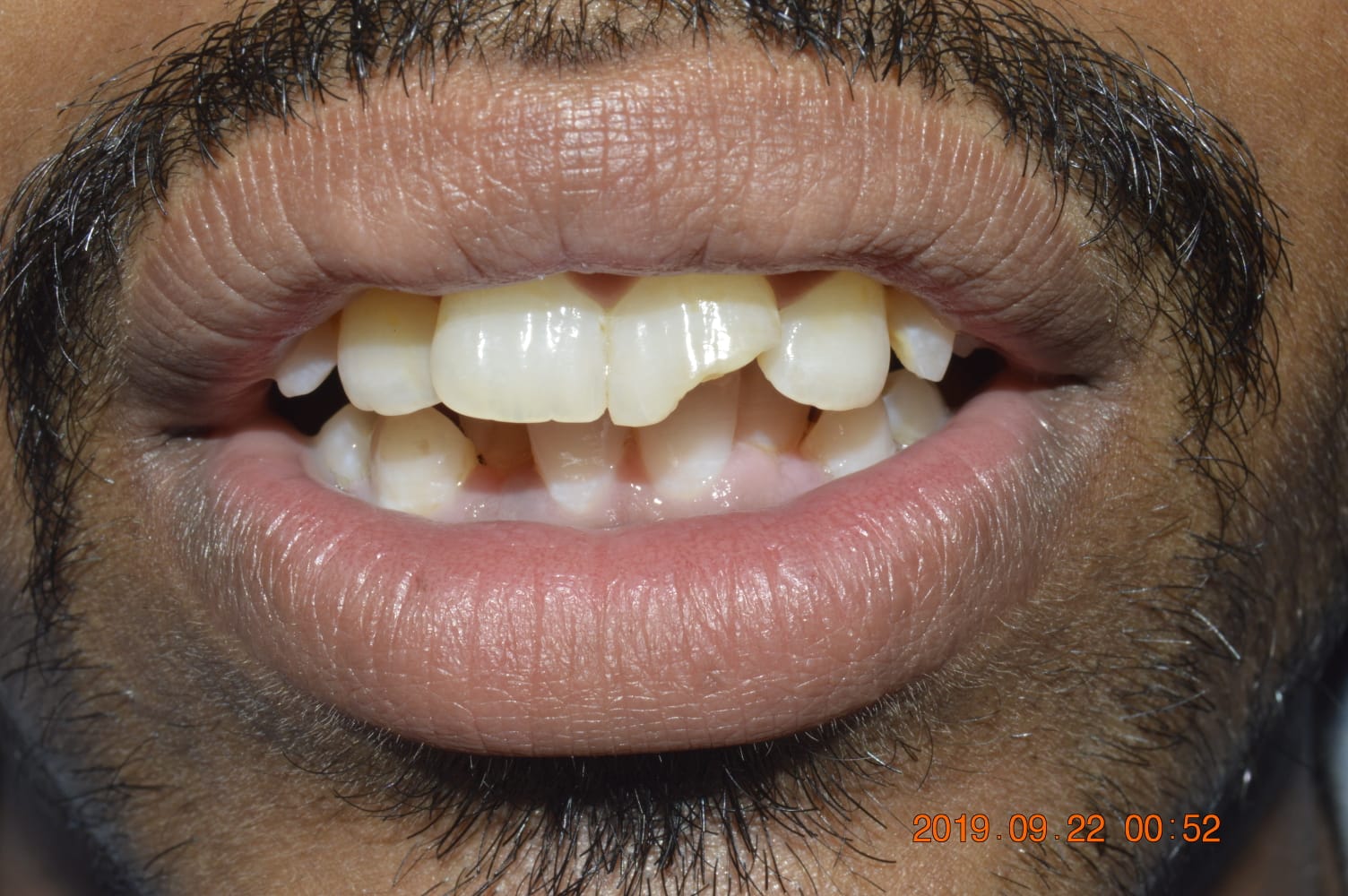
In 2019, a young man in his early twenties came to us with a broken portion of his upper left front tooth.
Because it was a front tooth, the concern wasn't only about restoring its strength. He also wanted it to look natural when he smiled.
He had already had the tooth repaired with a tooth-coloured composite restoration elsewhere. Unfortunately, the restoration did not last very long and came off.
So, what were the options?
We discussed the situation with him and explained the possible ways of restoring the tooth.
Considering the amount of tooth structure that remained, a direct composite restoration was a suitable option.
But this time, we wanted to give the restoration the best possible conditions for bonding and placement.
Keeping the working area dry
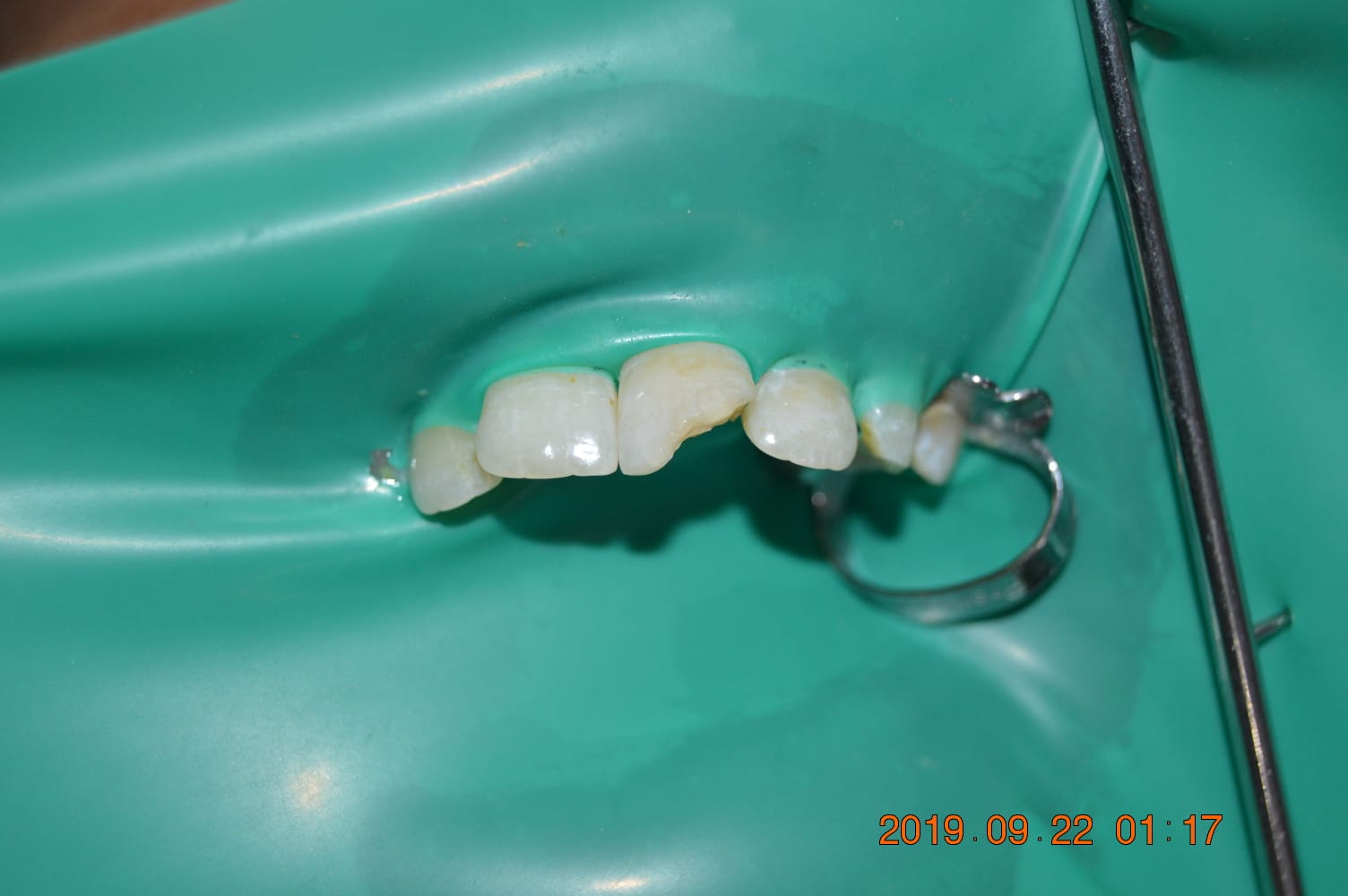
For this restoration, we used a rubber dam to isolate the tooth.
If you've never seen one before, a rubber dam is a sheet used to keep the tooth isolated from saliva and moisture during certain dental procedures.
This may look like a small detail, but when we're bonding a tooth-coloured restoration to a tooth, keeping the working area properly isolated is an important part of the procedure.
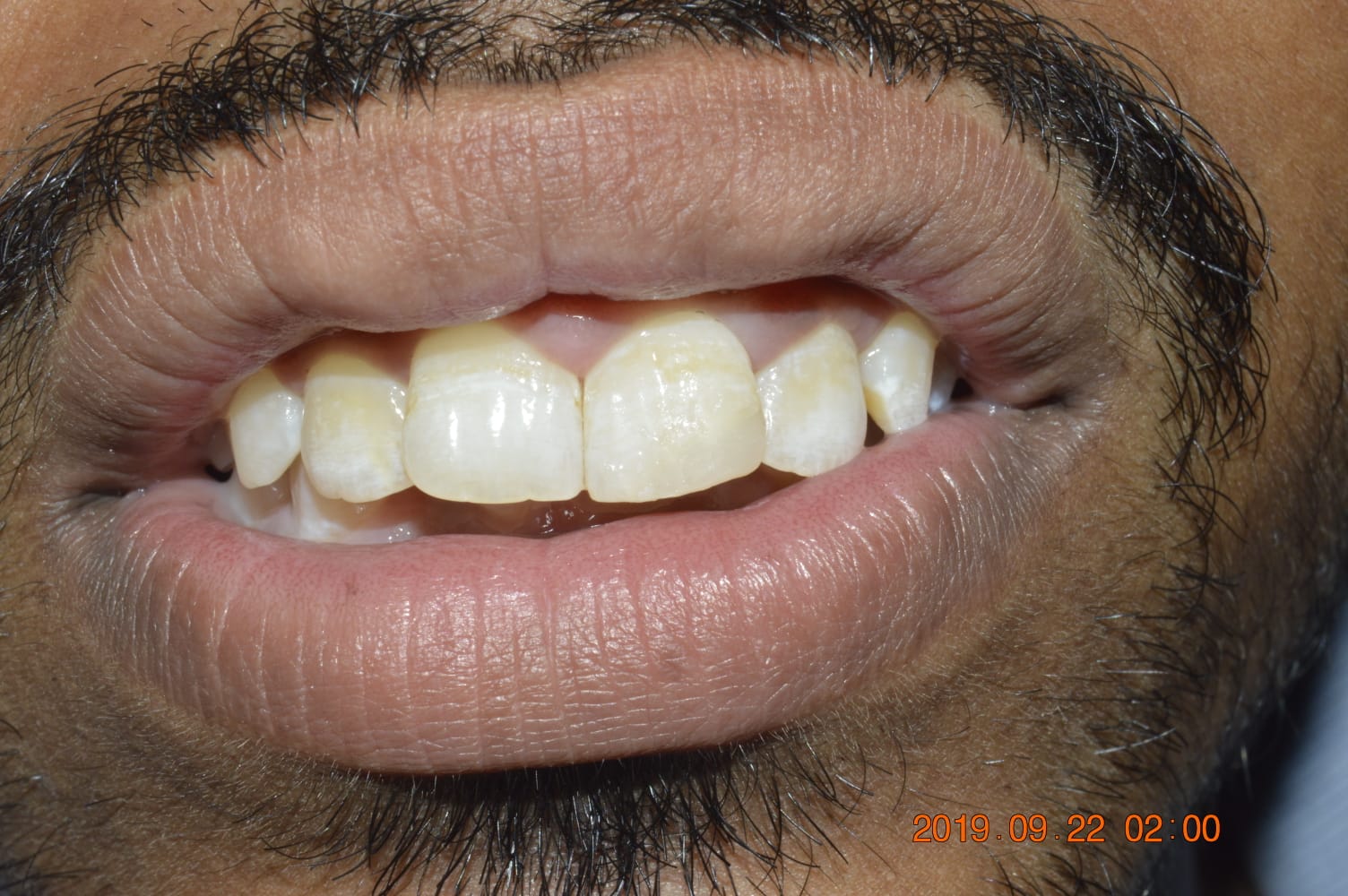
The broken portion was carefully rebuilt using composite resin, with attention to the tooth's shape, contours and appearance.
And the result?
The restoration was completed and the tooth was returned to a natural-looking appearance.
But the part we find most interesting about this case isn't simply how it looked immediately after treatment.
It is how it has continued to perform over time.
The restoration was completed in 2019, and it is still functioning well today.
That is now several years of service from a relatively conservative restoration on a front tooth.
Of course, every tooth and every patient is different. The longevity of a restoration depends on factors such as the amount of remaining tooth structure, biting forces, oral hygiene, habits and many other factors.
But when a tooth can be restored conservatively and the right technique is used, sometimes a relatively small restoration can make a very meaningful difference.
A note about this case
This is a real patient case from our practice. The photographs are shared for educational purposes with appropriate patient permission.
Individual results vary. The most suitable treatment depends on the condition of the tooth and the amount of healthy tooth structure remaining.