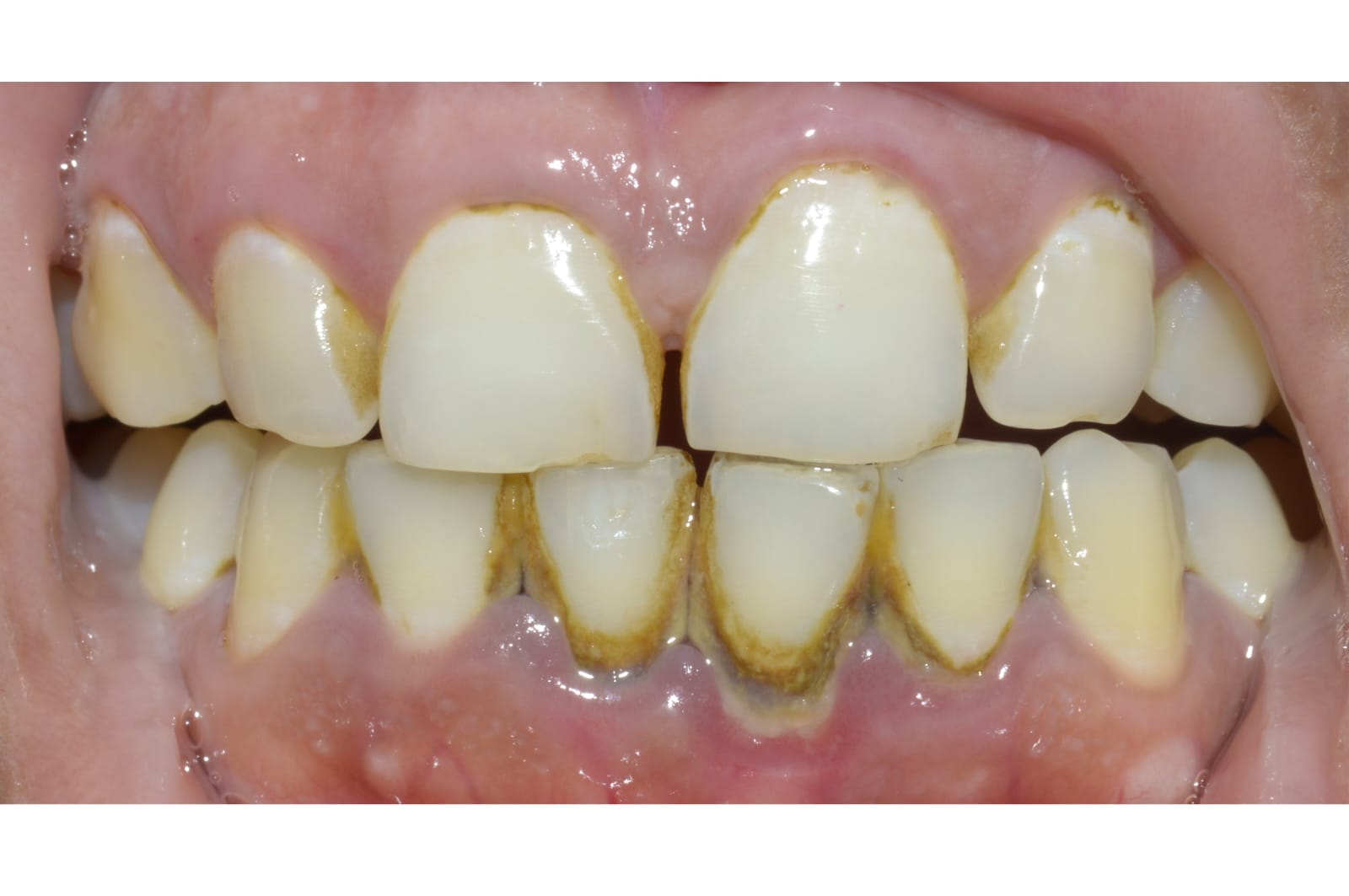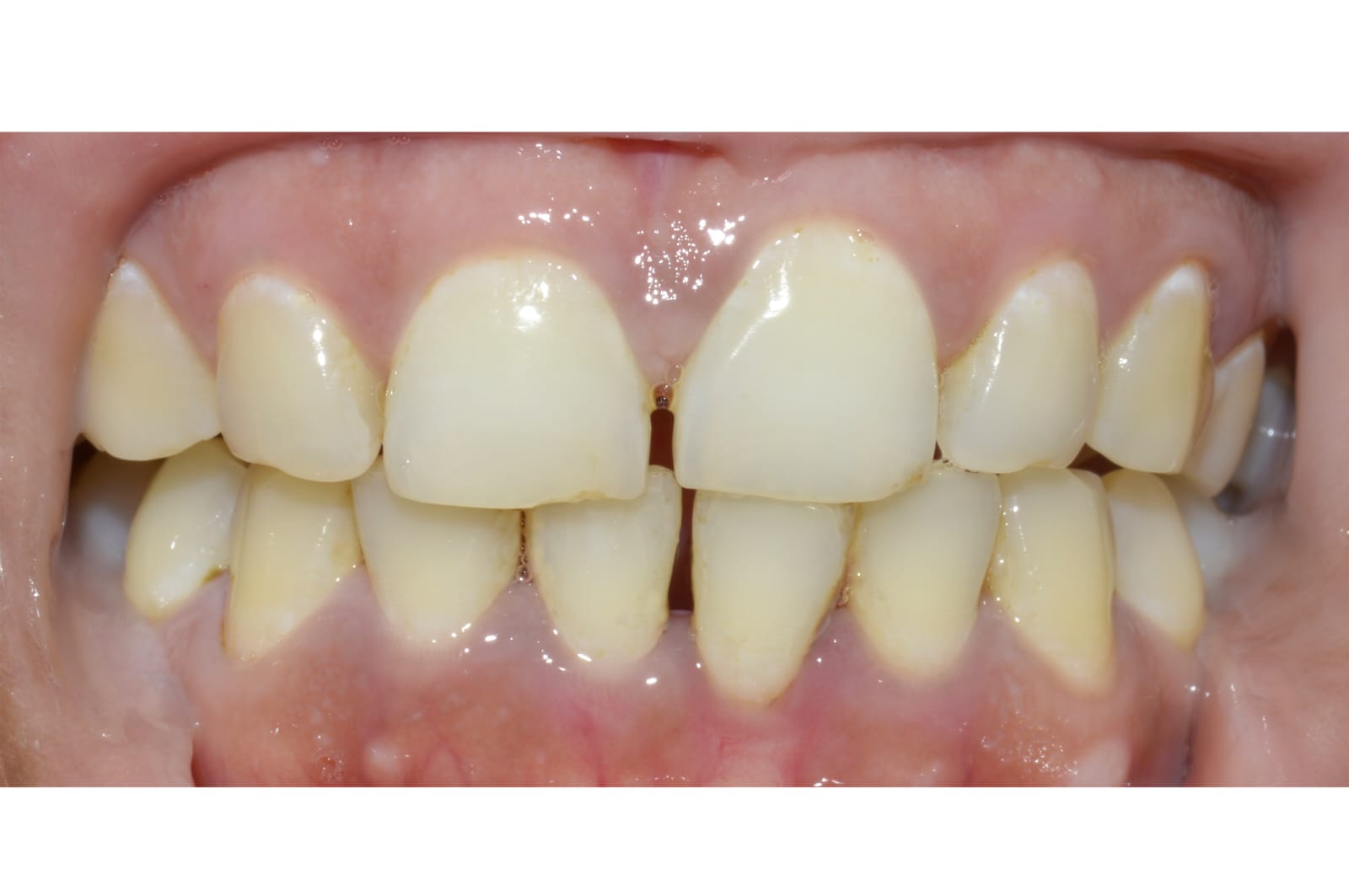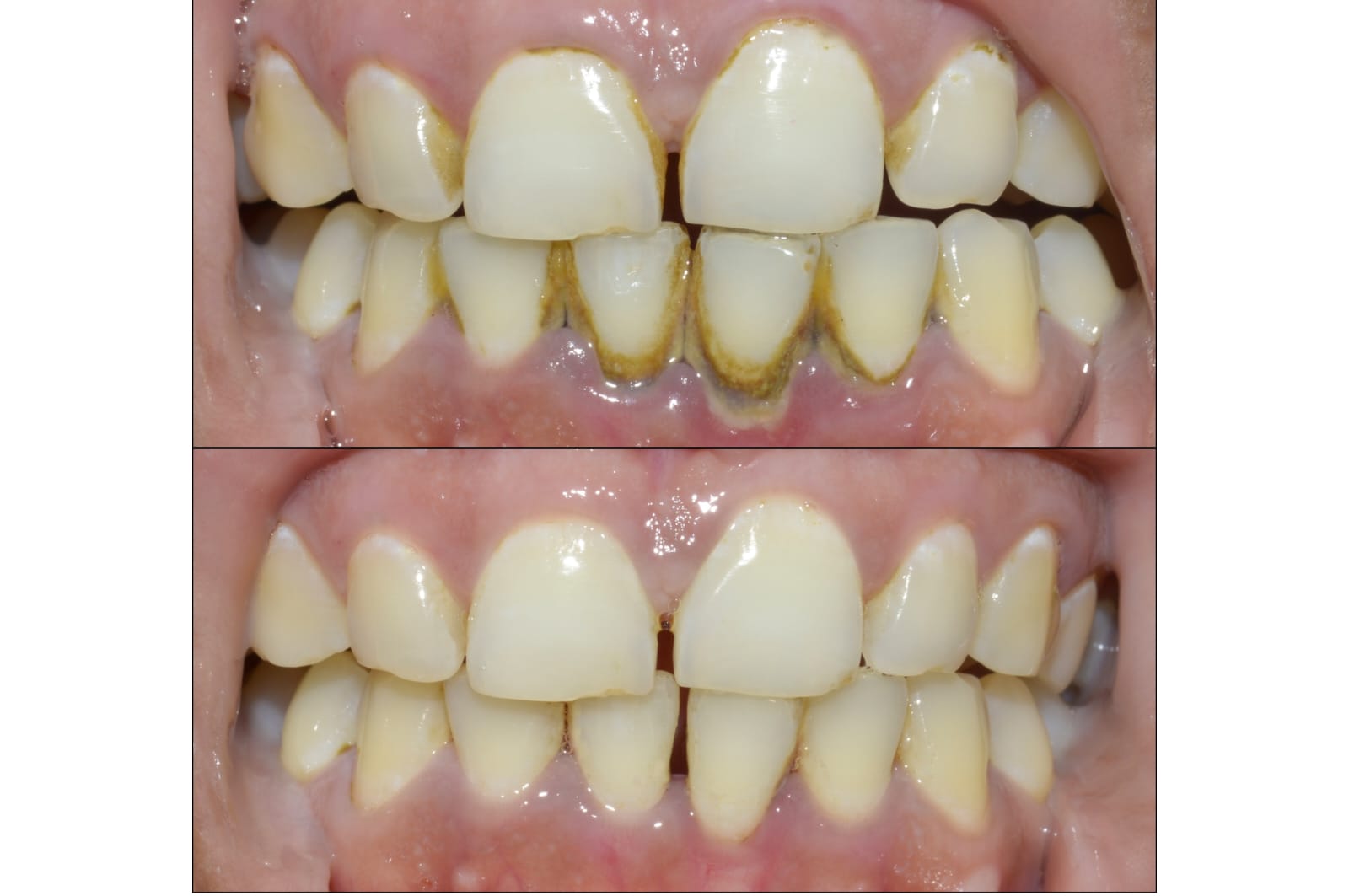
“Doctor, will scaling weaken my teeth?”
This is one of the questions patients commonly ask before getting their teeth cleaned.
Another question often comes after the procedure:
“I didn't notice any gaps between my teeth before. Why do I see gaps after scaling?”
Both questions are understandable. And the answer to both is a little more interesting than simply saying “No, scaling is safe.”
Let’s look at what is actually happening.
First, does scaling make your teeth weak?
No. Proper dental scaling does not make healthy teeth weak or remove the tooth’s protective outer layer.
Scaling is done to remove plaque and tartar—hard deposits that have built up on the teeth. Once tartar has hardened, brushing at home cannot remove it effectively; professional cleaning is needed.
So when you see a piece of tartar being removed during cleaning, it can sometimes look as though something is being taken away from the tooth itself.
It isn’t.
The material being removed is the deposit that has accumulated on the tooth.
Then why can my teeth feel different after scaling?
This is where the confusion usually starts.
After a cleaning, some patients notice that their teeth feel:
Smoother
Slightly sensitive
More exposed around the gum line
Or simply “different”
That does not necessarily mean the teeth have become weaker.
If there was a significant amount of tartar around the teeth, it may have been covering parts of the tooth and gum line. Once it is removed, you are seeing and feeling the actual tooth surface again.
Some temporary sensitivity can also occur after a deeper cleaning, particularly when there has been gum inflammation or the teeth have been covered by deposits for some time. The ADA(American Dental Association) notes that sensitivity and gum tenderness can occur after scaling and root planning.
But what about the gaps?
This is probably the most misunderstood part of scaling.
Sometimes a patient looks in the mirror after cleaning and says:
“Doctor, scaling made spaces in teeth.”
But scaling does not normally create a new space between two healthy teeth.
What can happen is that the space was already there, but tartar and swollen gums were partly hiding it.
Think about it this way.
Imagine tartar has accumulated heavily between two teeth.
The deposit occupies that area and can make the teeth appear closer together.
At the same time, gum disease can cause the gums to become swollen in the early stages. As the inflammation is controlled and the deposits are removed, the gums can shrink back towards a healthier position.
Now the area between the teeth may look more open.
The cleaning didn’t create the underlying problem.
It revealed what was already happening underneath.
Gum disease itself can cause gums to recede and, in more advanced cases, can affect the tissues and bone supporting the teeth.
So is seeing a gap after scaling a bad sign?
Not necessarily—but it shouldn’t simply be ignored either.
It depends on why the space is there.
For some people, it may simply be a small natural space that has become more noticeable after the teeth were cleaned.
In others, it may be related to gum inflammation, gum recession or loss of supporting tissues caused by gum disease.
This is why a dentist should look at the gums and supporting tissues rather than judging the situation just by how the teeth look in the mirror.
Does everyone need scaling?
Not necessarily. A dental check-up helps determine whether you have tartar or other buildup that needs professional removal. Some people need cleaning more frequently, while others may not need scaling at every visit.
Scaling isn’t something that should be done simply because a certain amount of time has passed.
Whether you need professional cleaning depends on what is actually present in your mouth—such as plaque, tartar, gum inflammation and your overall oral health.
The right treatment should be decided after examining your teeth and gums.
What happens during a dental cleaning?
For a routine cleaning, the dentist or dental professional removes plaque and tartar deposits from the teeth.
The teeth may then be polished to remove surface stains and leave the surfaces smoother.
If there are signs of gum disease or deeper deposits below the gum line, the treatment may be different. Deeper cleaning, known as scaling and root planning, is used to treat certain forms of gum disease.
So “scaling” doesn’t necessarily mean the same thing for every patient.
What should you expect after scaling?
You may notice that your teeth feel unusually smooth.
Some people experience temporary sensitivity, particularly to cold drinks or foods. Your gums may also feel slightly tender depending on how much inflammation or buildup was present.
These effects generally settle.
But if you have significant or persistent pain, swelling, bleeding or another concern after treatment, it is worth contacting your dentist rather than simply assuming it is part of the cleaning.
The important thing to remember
If you’ve been avoiding scaling because you’re worried that it will make your teeth weak or create gaps, that is not what proper scaling is intended to do.
Scaling removes plaque and tartar from your teeth.
If a gap becomes noticeable after a heavy buildup is removed, it may be because the deposits and swollen gum tissue had been hiding an existing space or gum problem.
And if you already have bleeding gums, gum recession, loose teeth or noticeable spaces developing between your teeth, it is better to have them examined rather than blaming the cleaning itself.
Your teeth shouldn’t be left uncleaned because you’re afraid that cleaning will make them weak.
The more useful question is:
what is causing the buildup or gum problem in the first place?
A small note from our clinic
We don’t recommend scaling simply as a routine procedure for everyone.
We first look at your teeth and gums and then decide what kind of cleaning, if any, is appropriate.
If it has been a long time since your last dental check-up—or if your gums bleed when you brush—we can examine the condition of your teeth and gums and explain what you actually need.