Saving a tooth when the inside of the tooth becomes infected
A deep cavity, crack, injury or repeated dental treatment can sometimes affect the soft tissue inside a tooth. When the pulp becomes inflamed or infected, root canal treatment may be recommended to remove the affected tissue, clean the root canals and preserve the natural tooth.
The aim is not simply to remove pain. It is to treat the source of the problem and, where possible, keep your natural tooth.
When might you need a root canal?
Root canal treatment may be considered when the inside of the tooth has become inflamed or infected.
Possible signs include:
- Persistent toothache
- Pain when biting or chewing
- Prolonged sensitivity to hot or cold
- Swelling around the tooth
- Tenderness around the gum
- A darkened or discoloured tooth
- A deep cavity or crack
- Previous dental treatment that has affected the tooth
However, not everyone experiences obvious symptoms. Sometimes an infection is detected during a routine examination or dental X-ray.
What happens during root canal treatment?
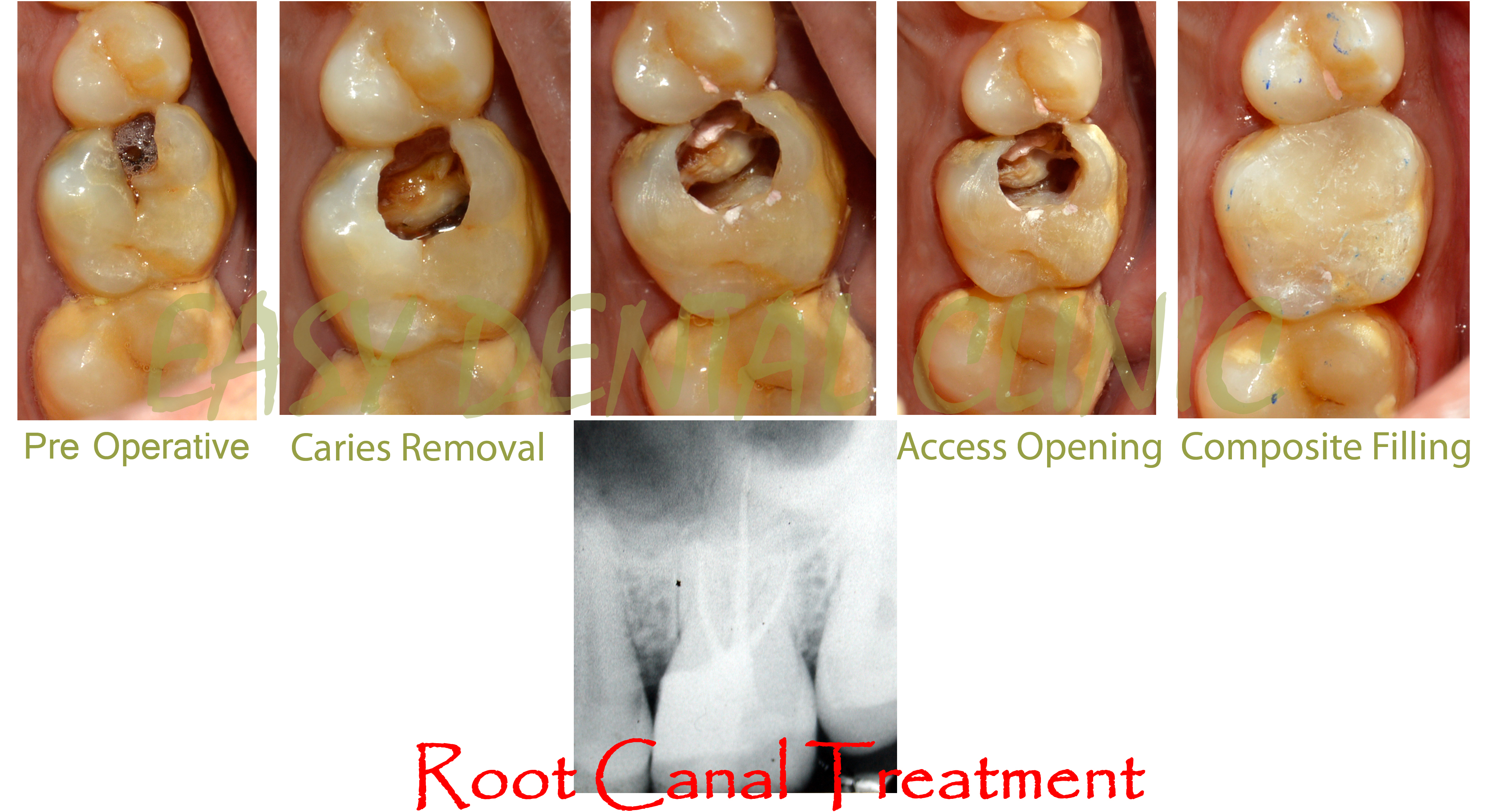
The exact procedure depends on the tooth and the condition of the infection, but the treatment generally involves:
1. Examination and diagnosis
We assess the tooth and, when necessary, use digital dental imaging to understand the condition of the tooth and its roots.
2. Accessing the inside of the tooth
A small opening is made to reach the pulp chamber and root canals.
3. Cleaning the canals
The affected tissue is removed and the root canals are carefully cleaned and shaped.
4. Filling the canals
Once the canals have been properly cleaned and prepared, they are sealed with a suitable root canal filling material.
5. Restoring the tooth
The tooth is then restored with an appropriate filling or, when necessary, a crown to help protect the remaining tooth structure.
Is root canal treatment painful?
Modern techniques and local anaesthesia allow root canal treatment to be performed comfortably for most patients.
The tooth may feel sore or sensitive for a few days afterwards, particularly if there was already infection or inflammation. We will explain what you can expect after treatment and how to manage any discomfort.
Why save the natural tooth?
When a tooth can be predictably treated and restored, preserving the natural tooth can have important advantages.
Keeping the natural tooth helps maintain the existing bite and avoids immediately having to replace the tooth with an implant, bridge or denture.
However, whether a tooth can be saved depends on how much healthy tooth structure remains and the condition of its roots and surrounding tissues.
What happens after a root canal?
A root-treated tooth may require a permanent restoration to protect it, particularly when a significant amount of tooth structure has been lost.
It is important to follow the recommended restoration and follow-up schedule and to avoid placing excessive pressure on a tooth that has not yet received its final restoration.
Root canal or extraction?
When a tooth is badly damaged or infected, patients sometimes assume extraction is the only option.
In some cases, however, root canal treatment may allow the natural tooth to be preserved.
We assess the tooth carefully and explain whether saving it is a realistic option or whether removal and replacement should be considered.
Have you been experiencing persistent tooth pain?
Don’t wait for the pain to become unbearable.
A dental examination can help identify what is causing the problem and whether root canal treatment or another option is appropriate.
Book a Root Canal Consultation